Loss is an intense and deeply emotional album, where black metal takes on a more atmospheric and melancholic dimension. Released in 2026, the record combines aggression with more melodic moments, creating a constant sense of weight and introspection. It is a work that deals with pain and loss, but in an engaging and almost hypnotic way, helping to establish Gaerea as one of the most interesting bands in the genre in recent years.
M.I. - You started 10 years ago as a black metal band, but in recent interviews you mentioned that you no longer fit exclusively within that style.
Exactly. For all intents and purposes, our DNA still carries a lot of black metal, in an explosive kind of music. If we look at the technical side, we still have some black metal elements with very explosive drumming, blast beats for days. However, at our core, we are no longer a black metal band. We are a mix of what defines modern metal today something more contemporary, with touches of metalcore, hardcore, nu metal, and death metal.
M.I. - We know you are constantly touring and your musical growth has been remarkable. But in your free time, besides resting, what do you usually do?
It depends on the tour and, of course, the destination. On this last tour with Orbit Culture, we had our own bus, which allowed us to stay productive and work on the band’s back-end. We also like to have some entertainment: going to the gym, maintaining a sense of normality. The more normal touring feels nowadays, the better. Touring used to seem like a lawless experience where sleep didn’t exist, but now we try to maintain sleep schedules. We’re actually quite boring on tour, we’re well-behaved. We rest, we don’t drink much, and we don’t do drugs, because we want the mental and physical capacity to keep doing this for another 10 years. Aside from that, we also value our personal space. Each of us is quite different, and if touring has taught us anything, it’s how to get along well together, even when we’re packed like sardines on a bus. It’s important to know when each of us needs their own space. We’re a very normal band.
M.I. - Coma came out two years ago and pushed Gaerea into a new realm. What can we expect from Loss?
I don’t really know how to answer that, and you’re not the first one to ask. It’s definitely a fair question. We can say it’s a bold album, full of attitude. I don’t want to overhype it, but the truth is that not many bands, after 10 years of career, would do something like this with songs like the ones you’ve heard… not just the singles, but tracks that might surprise people who weren’t expecting them at all.
Above all, we’re very happy and satisfied. It’s the album we needed to make. It’s truly a “go big or go home” moment, and that’s what we’re aiming for. We have big plans, and I think this will be the album that takes us to new audiences, stages, tours, and opportunities. It’s more open, more intimate, and more direct in what we want to say.
We come from a place where things were very metaphorical and literary, which was interesting and something we’ve already done. This album may also bring some backlash, it’s part of the band’s growth, and there will be moments of rupture, because no rise comes without setbacks. Still, we’ve managed to deal with that.
M.I. - Loss opens with “Luminary,” a track that blends aggression with melody, and closes with “Stardust,” a calmer ballad.
The album title clearly reveals the theme. For the first time, I’m making an album about myself and my life, especially my teenage years.
There was a time when I lost my best friend, and “Stardust” is dedicated to that person. It’s an album that deals a lot with impostor syndrome, that feeling of not belonging anywhere, which you can hear in “Nomad.” It also reflects the struggles we face as artists.
It explores my personality, including some of the more tragic aspects of my upbringing and adolescence—things we all go through. I’m not trying to portray myself as a martyr, because we all lose people in life and that shapes us.
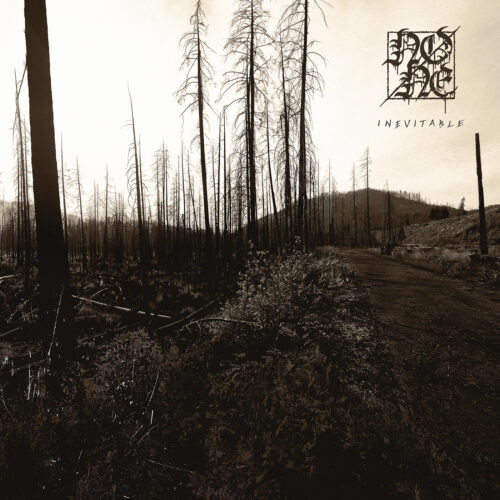
Only recently did I realize that some of my issues come from that, and I didn’t know how to deal with them. This album aims to convey that message, to open up discussion. It was only after sharing this with Gaerea and others that I started seeing things differently and stopped feeling so guilty. At the same time, I believe it’s also an album about hope and light (as you can see on the cover), about how sharing and talking can show that the world isn’t as dark as it seems.
M.I. - On the other hand, the video for “Nomad” seems to be a reference to old-school black metal. Where was it filmed and why that setting?
The video was filmed in Latvia, where we also shot the other videos with our director Pavel Trebukhin. I love his work, he’s worked with bands we admire, like Imminence, Amon Amarth, In Flames, etc. He’s around my age, and we get along well, including with his band. We did everything in Latvia, and it worked perfectly because we wanted something simple… just me, like a journey without direction or destination. He created that whole atmosphere, and Latvia was completely covered in snow, which is something we don’t really have in Portugal.
M.I. - I get the impression that your videos feature elements like water, air, and fire. Am I right?
I think it was just random. I’ve seen that theory on our Discord. It’s easy to notice natural elements, but it wasn’t intentional. We just wanted something visually appealing, like in “Submerged,” where water made sense. “Hellbound,” by its name, had to involve fire, something like a Dune or Blade Runner setting. Fans thought “Phoenix” would be related to air, but it’s always interesting to see how people interpret things.
M.I. - Some old-school fans feel your musical evolution was unexpected. Does this new album bring back elements of Limbo and Mirage?
Maybe. It’s all created by the same person, so it’s natural that ideas carry over from one era to another. I’m really happy we’re building a career where each album feels different. That’s always been our goal. Some bands repeat and recycle their sound—like Amon Amarth, who have a defined style. They’re a fantastic band, but we’re not that kind of band. We don’t have a fixed sound… you can’t define us just by listening to a few songs. Back in the Limbo and Mirage days, I didn’t have any ideas for songs like these. These things take time, and you evolve as an artist and as a person.
Five years ago, if someone told me I’d write something like “Stardust,” I would have thought it impossible. It’s normal not to please everyone, and a band that changes also changes its game. With Loss, it’s impossible to satisfy everyone. It’s our biggest album, shows are sold out, and things are going well. For example, Watain is my favorite band, but I don’t like all of their albums.
M.I. - You did a special performance in your hometown, at Museu Santa Maria de Lamas. Was it a more intimate experience for Portuguese fans?
We opened it to everyone and had people coming from all over the world: Spain, Greece, Italy. It was limited to 150 people. The museum is amazing, and we wanted people to experience it. Personally, it’s one of Aveiro’s best-kept secrets. The museum helped us rehearse, and this was our way of giving back. All proceeds went to the museum. It’s a private museum that faces challenges, as it doesn’t rely on public funding. This was our way of thanking our artistic community and our city. It was a great afternoon, and for some people, it was their first time hearing some of the songs.
M.I. - Can you share three bands or albums that inspired Loss?
We listened to a lot of things while making this album. My inspirations are always there, but maybe they’ve never been this noticeable. For example, Linkin Park: part of my teenage years. I’m 30, I grew up with them. Also, Architects, a band I love that blends well with everything, and Watain, especially when we need to create something more beautiful or atmospheric. They’re always a reference for us.
For Portuguese version click here
Listen to Gaerea, on Spotify
Questions by André Neves